
Library IT Projects As Drivers Of Organizational Change
This is a talk I gave way back in 2017. I was invited by Rachel Frick to keynote the first OCLC DevConnect developer conference. Five years later now, I just had an opportunity to re-read this presentation and thought it… Continue Reading Library IT Projects As Drivers Of Organizational Change

Comfort with ambiguity in the age of Covid-19
From a twitter thread I wrote today in which I asked, “Are you un/comfortable with the level of ambiguity we’re experiencing professionally right now (not enough info, lacking specifics)? We often see “comfortable with ambiguity” in job ads & this… Continue Reading Comfort with ambiguity in the age of Covid-19
IIIF will fundamentally change the way we deliver and use images on the web
Note: this was originally posted on the NYU Digital Scholarship Services blog. Wouldn’t it be great to be able to virtually reconstruct a manuscript whose physical pages are dispersed among multiple archives? How about easily using a virtual lightbox to… Continue Reading IIIF will fundamentally change the way we deliver and use images on the web
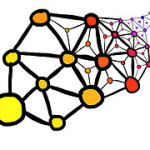
CNI fall 2014, Dispatch #2: It’s all about relationships
At CNI 2014, I decided to pick a topic and focus, rather than graze on all the various and interesting issues being discussed. So I attended all the sessions that had to do with linked data plus related technologies and standards. Why… Continue Reading CNI fall 2014, Dispatch #2: It’s all about relationships
CNI fall 2014, Dispatch #1: 12/7 Executive Roundtable on Supporting Digital Humanities
I’m here in Washington, DC for the Coalition for Networked Information‘s 2014 fall membership meeting. CNI meetings are typically attended by heads of libraries and heads of library or campus information technology. I came to participate in yesterday’s Executive Roundtable on… Continue Reading CNI fall 2014, Dispatch #1: 12/7 Executive Roundtable on Supporting Digital Humanities
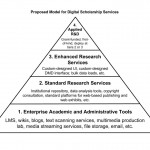
SERVICES! for all areas of knowledge!
For the past three years at NYU Libraries, we have been thinking deeply about how libraries can support digital scholarship in a scalable and sustainable way. My colleague, Monica McCormick, and I gave a presentation on this topic at the Digital Library Federation… Continue Reading SERVICES! for all areas of knowledge!
“Digital humanities in higher education” @ ITHAKA Sustainable Scholarship conference 2013,
Update: This session was videotaped and you can watch it here http://vimeo.com/album/2611239/video/79505431 Today I took part in a panel entitled “Digital humanities in higher education” at the ITHAKA Sustainable Scholarship Conference 2013. This panel included Karen Calhoun (moderator), AUL Organizational Development and… Continue Reading “Digital humanities in higher education” @ ITHAKA Sustainable Scholarship conference 2013,
Day of Digital Humanities, 2013
As part of the “Day of Digital Humanities, 2013” (Monday, 4/8/2013), I’ll be blogging over here about my day of digital scholarship.
Supporting Digital Scholarship in Research Libraries: Scalability and Sustainability
Monica McCormick and I just published an article entitled “Supporting Digital Scholarship in Research Libraries: Scalability and Sustainability” in the Journal of Library Administration special issue “Digital Humanities in Libraries: New Models for Scholarly Engagement,” edited by Barbara Rockenbach (Columbia University).… Continue Reading Supporting Digital Scholarship in Research Libraries: Scalability and Sustainability
Supporting Digital Humanities in the Library: Creating Sustainable & Scalable Services
At the Digital Library Federation 2011 forum, Monica McCormick (NYU’s Digital Scholarly Publishing Officer) and I participated in a session called “Supporting Digital Humanities in the Library” along with colleagues from Emory University: Tim Bryson, Miriam Posner, and Alain St. Pierre.… Continue Reading Supporting Digital Humanities in the Library: Creating Sustainable & Scalable Services
Is “seamlessness” really a useful goal?
A number of us at NYU Libraries just emerged from a 2-day strategic planning retreat. We did loads of good work and have the draft of a plan that should keep us busy for the years to come. There were… Continue Reading Is “seamlessness” really a useful goal?
An infographic with poorly sourced and inaccurate “facts.”
A week or so ago I received a request from someone suggesting that my blog readers might enjoy an infographic “about how Wikipedia is redefining the way we research,” and asking for my thoughts about it. This graphic, entitled “Wikipedia… Continue Reading An infographic with poorly sourced and inaccurate “facts.”
WordPress.com vs. WordPress.org
In order to more intelligently advise scholars about their options for creating websites, I’ve started investigating various website hosting platforms. I want to compare features and highlight the plusses and minuses of each for blogging, website hosting, content delivery, etc.… Continue Reading WordPress.com vs. WordPress.org
Project Portfolio Management for Academic Libraries: A Gentle Introduction
Pre-print for “Project Portfolio Management for Academic Libraries: A Gentle Introduction,” College & Research Libraries. Abstract: In highly dynamic, service-oriented environments like academic libraries, much staff time is spent on initiatives to implement new products and services to meet users’ evolving needs.… Continue Reading Project Portfolio Management for Academic Libraries: A Gentle Introduction
Why understanding the Digital Humanities is key for libraries.
I just read a recent blog post by MITH Director Neil Fraistat, “The Questions(s) of Digital Humanities,” in which he discusses the Digital Humanities not just as a set of practices enacted by humanists, but as a field or discipline… Continue Reading Why understanding the Digital Humanities is key for libraries.
